

The editors we interviewed made trailers for the games shown here.
Game developers are experimenting with generative AI to make trailers, but is it capable of doing that? By using genAI to speed up this marketing step, it’s functioning as a shortcut that is seen as lazy and poisonous. Any association with genAI can ruin a game’s reputation, as happened with ARK: Aquatica and James Pond Legacy. We’ve reached out to those who produce game trailers to see how they feel about it in their field.
Derek Lieu is a renowned game trailer editor who has been making them for over 10 years, many of which you’ll recognize. Some examples include Half-Life: Alyx, Psychonauts 2, Among Us, and plenty more. As someone strongly against genAI, he was quick to explain his disdain for it,
“Even without considering the negative ethical, ecological, or legal implications of using genAI (of which there are MANY), I think it’s utterly ridiculous to even consider using it in creative works because even a little bit will make people question everything else in the game or trailer. You can’t put a tiny little bit of poop in a dinner and expect people to eat it.”

While making game trailers isn’t easy, taking a hands-off approach is likely to cause problems instead. Lieu has made many blog posts and videos over the years to educate those attempting to create their own trailer. These teach fundamental rules like how to structure one and effectively showcase what your game is. While anyone can make the common mistakes Lieu has covered, a genAI tool is guaranteed to ignore those rules. As he once said in a video, “Stop making a trailer based off what you think a typical trailer looks like.”
This is exactly what genAI will do since it’s incapable of coming up with unique ideas. It’ll instead rely on what it’s trained on and then potentially mislead its audience. This is why it’s essential to learn the basics or work with an expert like Lieu,
“You’re depriving yourself of an essential skill—developing your eye for what is good—which is an ongoing process even for veteran editors. The strength and differentiator of an experienced professional is their eye and perspective—it’s why someone hires me instead of another editor or agency (or vice versa). If everyone is using an AI to select ‘the best takes’ then everyone’s ‘eye’ is coming from the same place.”
The Art of Making a Game Trailer
Game Trailer Specialist Owen Trett has made trailers for games like Vampire Survivors, Raccoin, and Rusty’s Retirement, to name a few. Alongside working at Future Friends Games as senior video editor. Here are their thoughts on the art behind making trailers,
“Video games are an art form, human by nature. I would even go as far to say that video game trailers are too a form of art. Even though the main result of a trailer is to market a product, the process is much more than that – in a sense, you are trying to get on the same page as the developers, understand the love and energy that has been poured into each facet of design, art, writing etc.”

Skipping this process leads to a soulless video without the precision and intent behind every choice editors like Trett make. As they explain it, “you’re making hundreds of small decisions in a short amount of time to create a trailer – is this shot too short? Is this messaging correct? Does the capture here add to the overall narrative that I want to portray? All of these decisions are subjective – there’s no objective / binary way to approach game trailer creation.”
Removing the human behind these decisions is putting too much trust into a tool that doesn’t understand what it’s creating. As a mentor at Limit Break, Trett helps marginalized developers get into the games industry. When asked how they feel about genAI in mentoring, they expressed their concerns regarding what it trains on.
“GenAI has been trained on information from a variety of different sources, sources that — whether consciously or not — have results based on patriarchal norms, homophobia, racism, misogyny etc.” Trett continued, “Because unfortunately, that is the internet that we live in today. … To recommend genAI in mentorship is similar to shooting myself in the foot.”
Issues like these further contribute to how genAI completely taints what it touches. This is a common concern among gamers who aren’t fond of it, where any usage is enough to send them away. Trett echoes much of the same thinking that Lieu previously mentioned.
“When developers use genAI for marketing, it says one thing: ‘We do not care about the quality of our product’,” Trett noted. “The main point in my mind at this stage is that if you’re willing to do the bare minimum for one of your most important marketing beats, then you’re probably doing the bare minimum in the development process too. In all honesty, if you use genAI, I will not respect you or your product.”
Replacing Everything With GenAI is a Recipe For Disaster
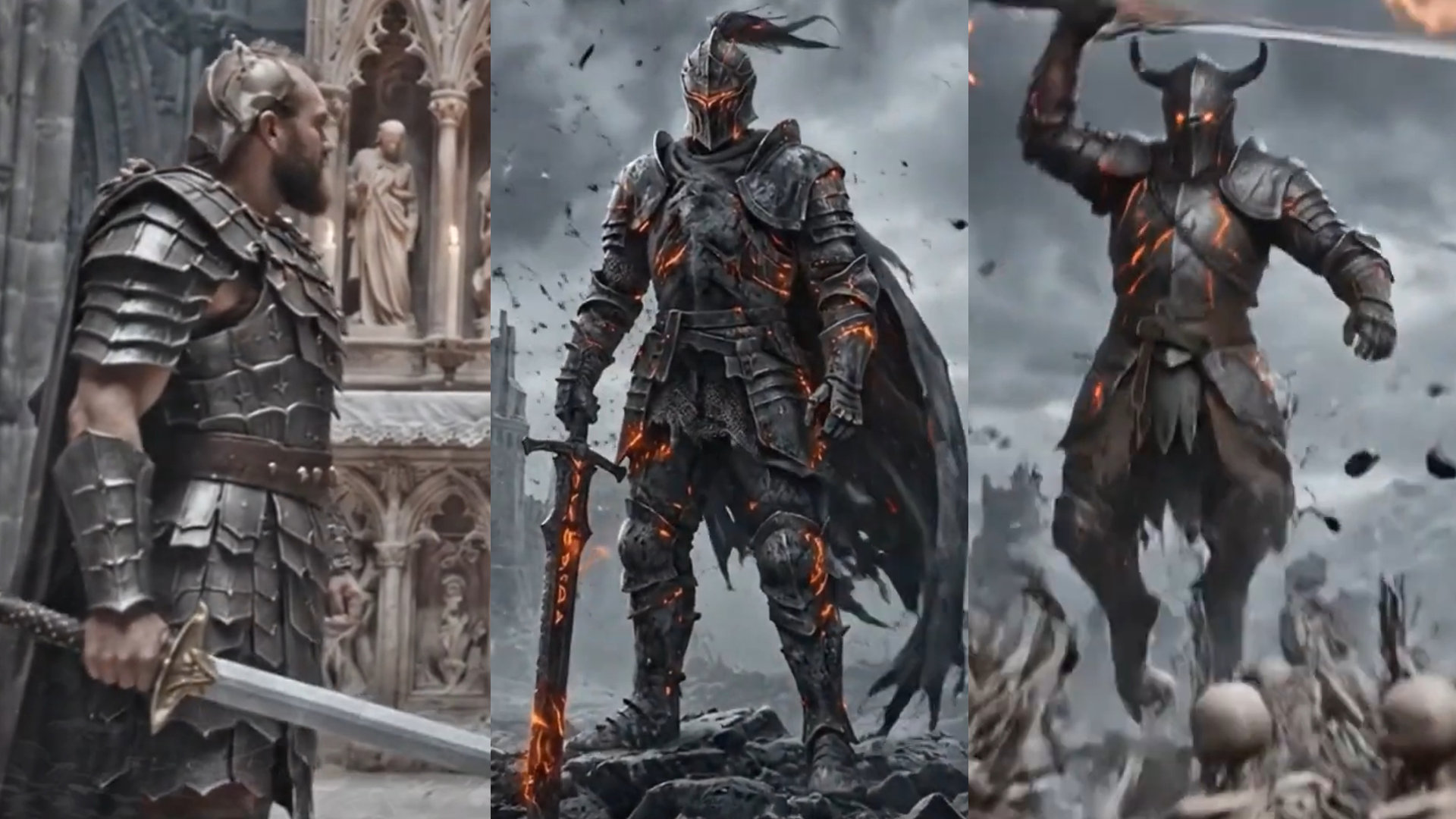
This genAI tutorial for making game trailers failed to keep its knight consistent. It also morphed the knight’s helmet into their head at one point.
Game Trailer Editor Suzanne Wallace, owner of IndieBard, explains where genAI falls short compared to the human touch, “The tools have been created to replicate adequacy — not ingenuity, wackiness, or even excellence — just something that looks mostly okay.”
This is still a generous way of describing the AI-generated trailers we’ve found. They may generate pretty visuals at a glance, but more often than not, they’re filled with mistakes and little value. Which is made worse by the people generating these trailers also generating everything else. A recurring theme we’ve noticed is AI voiceovers and AI music on top of AI visuals.
When a well-curated song can make or break a trailer, it’s foolish to cut corners on that. Wallace recently produced a portfolio trailer for an investor named WINGS. Without even discussing the edits she made, the song she used instantly became an earworm that I couldn’t escape. Why would a game developer want to risk losing something as powerful as that? This is why it’s no surprise that Wallace doesn’t use genAI,
“I don’t use any form of genAI in my work because quite frankly, I’m better at it than AI is. Making trailers is a form of storytelling: we’re crafting mini versions of the game’s full story, designed to reach and speak to the exact people who will most love the game.”

The Impact of Generative AI on Trailer Editors
While genAI lacks the skill to replace the quality that trailer editors deliver, Wallace still worries about how developers may use it, “I think it’s going to hoodwink a lot of teams, of all sizes, and result in a lot of crappy trailers and a lot of lost work for editors.”
Considering the backlash we’ve seen when games are associated with genAI, it’s wild to take that risk. But even still, Lieu shares similar thoughts as Wallace, “I’m most worried about game trailer editors who are just getting started because when you’re inexperienced, a lot of people just view you as a button pusher who knows how to use editing software.”
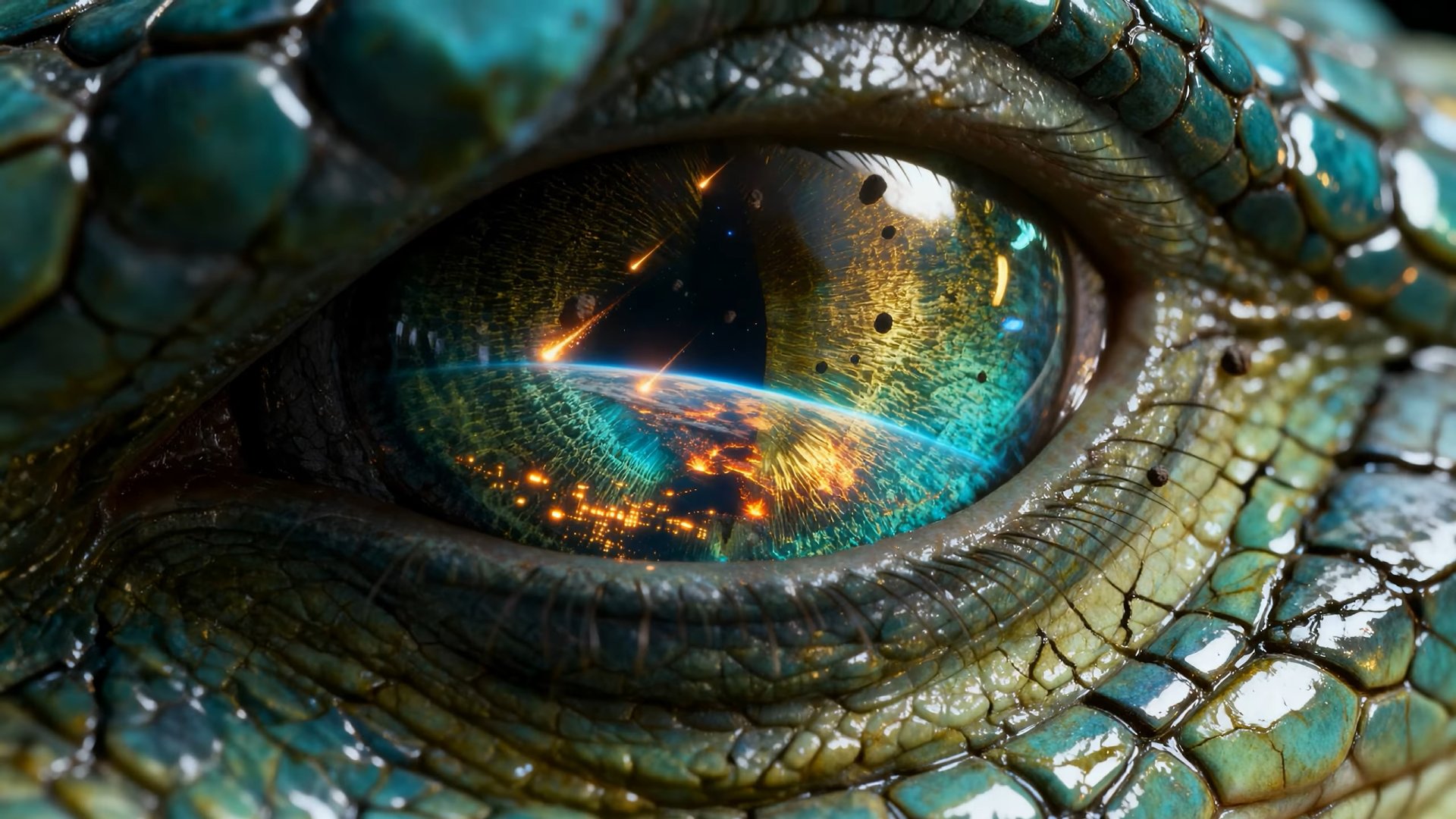
This frame from an AI-generated game trailer shows a reptile with eyelashes. As far as we can tell, reptiles don’t have eyelashes.
When asking Trett if they have any worries about genAI impacting their career, they said,
“Not at all. It’s clear to see that genAI is a fad, something forced down our throats by shareholders who are completely out-of-touch with reality. It’s hemorrhaging money, destroying the planet, and adding no value to the creative process.”
One unfortunate way genAI affects creators like Trett and Lieu is how it creates extra work to avoid it altogether. Lieu said, “So far the biggest impact it’s had on my day-to-day is since I’m so against genAI I have to dedicate additional brain cells to deciding if a project that comes my way uses it.”
Trett adds to this sentiment as well, “It’s inconsistent, lazy, and only creates more work during stressful periods – something that has similarly been found with programmers having to spend more time to clean up vibe-coded mess.”
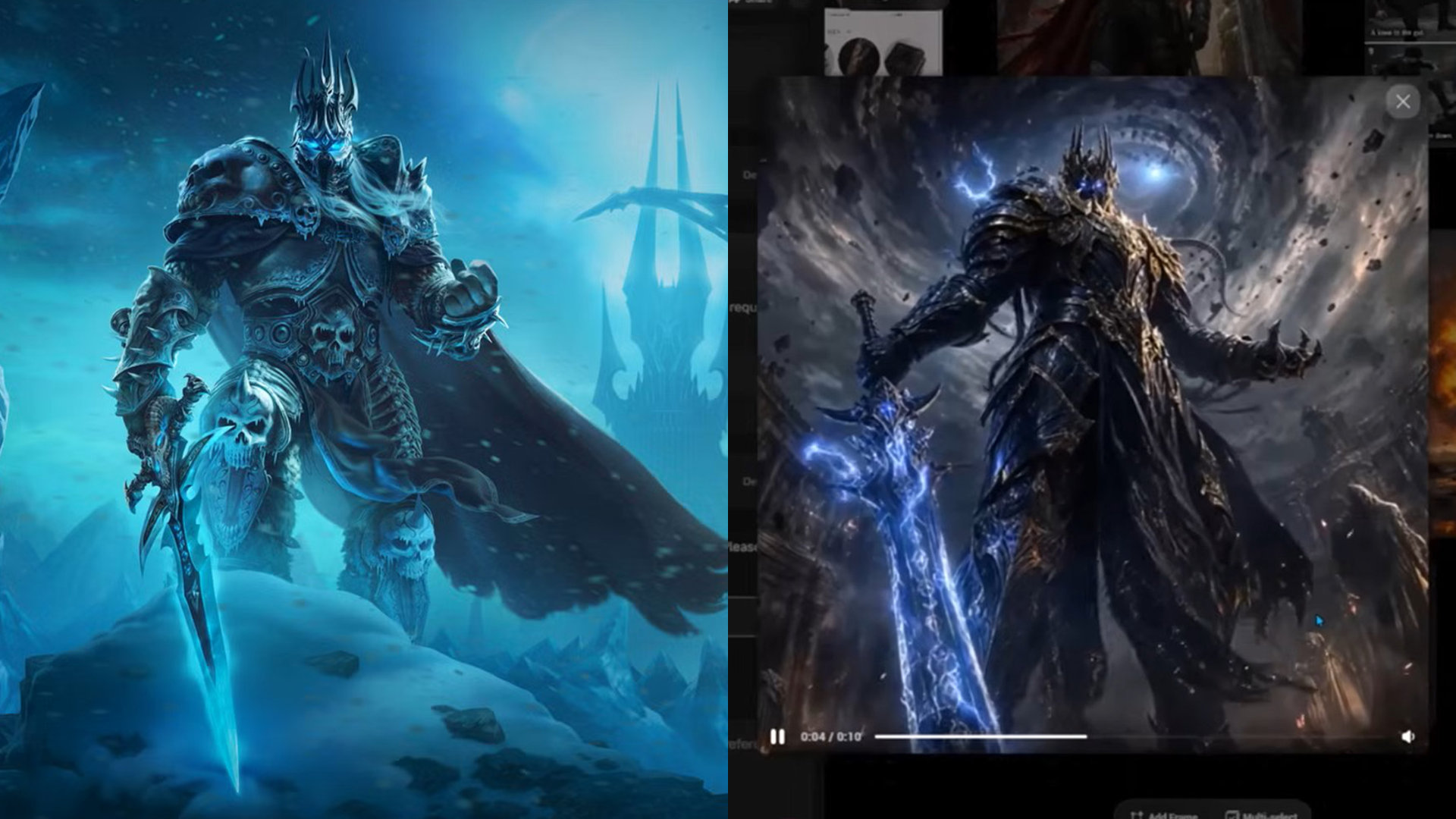
This side-by-side comparison shows the Lich King from World of Warcraft and a similar character from a genAI tutorial for making game trailers.
Fortunately, Lieu doesn’t foresee genAI taking work away from him due to how inferior it is. As he explains, “I’m well established enough that people value my skills and perspective enough to want my hands making a trailer for their game. I also think anyone who would want to work with me doesn’t want AI anywhere near their project. I think developers and players want the highest quality handcrafted experiences and genAI use is the absolute antithesis of that.”
Developers who use genAI in place of a skilled trailer editor will quickly learn that they have no idea what makes a good trailer. As Wallace eloquently put it, “It’s too specific a skill to be well achieved by a tool that is designed to deliver cookie-cutter results.”


Jeff is a journalist with over 10 years of experience writing, streaming, and making content about video games. With an associate degree in journalism, he’s a sucker for RPGs, survival games, roguelikes, and more.